
Better Global Future · Module 2 of 5
Module 2: Learning from Diversity
Explore the many ways in which people differ, and what becomes possible when you engage with difference instead of avoiding it.
We all grow up with a sense of what is normal: how people live, eat, worship, earn, love and speak. Much of that "normal" is simply the habit of the place and the group we come from.
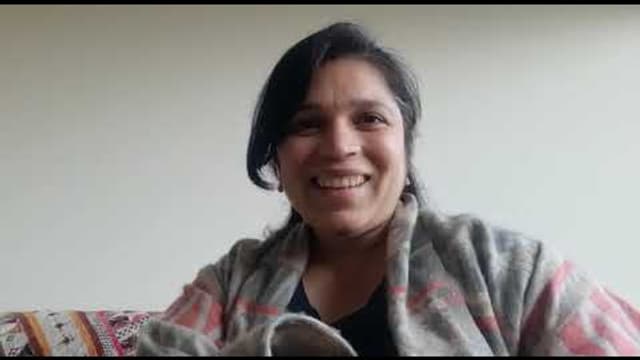
In this module, hosted by Neha from India, you look at how varied the human family really is: where people live, how wealth is shared, and differences of gender, age, faith and culture. Then you ask yourself how willing you are to learn from people whose lives are unlike your own.
Your worksheets for this module ↓
Three short worksheets go with the eight steps. Print them, fill them in on screen, or keep a notebook beside you.
In this module you will
- Reflect on your own experience of diversity, and where you feel at ease or challenged.
- See the global picture of where the world's people live and how unevenly wealth is shared.
- Recognise how your own idea of "normal" shapes the way you see other people.
- Commit to one way of engaging more with difference.
What you can take away
- A sense of where you stand in the global picture, by region and by income.
- Awareness of the differences you welcome and the ones you tend to avoid.
- A practical step towards learning from people outside your usual circle.
Your worksheets
Read each worksheet online first; download the fillable PDF only if you want your own copy. Your answers stay with you.
Reflect
Step 1: Your initial thoughts
Listen
Step 2: Hear what others think
Challenge
Step 3: Challenge your thinking
The film imagines the world as a village of 100 people: where they live, how many live in cities, how wealth and income are shared, and how people differ in gender identity, age, religion and culture. You can watch it in one go or pause to take notes, but do watch to the end.
Its central idea is simple and demanding: what is normal for you is not necessarily normal for anyone else. Along the way it asks whether you are part of the global majority or a minority, and how often you really talk with people outside your own income group.
React
Step 4: Your reaction
Listen
Step 5: Explore the reactions of others
Participants describe what the film stirred in them: the value of working across generations, unease about how rarely we meet people from other income groups, and the realisation that "normal" is often just habit.
Reflect
Step 6: Your AHA moment
Listen
Step 7: Hear the AHA of others
Commit
Step 8: Let's do something!
Go further
Suggested activities
Optional tasks to deepen your thinking after the eight steps. Pick one that suits you; there is space for it at the end of the worksheet.
Your diversity map
20 minutes
Draw yourself in the centre of a page. Around you, note the people you talked with properly in the past week: their age, background, faith, income and where they grew up. Where is your circle diverse, and where is everyone much like you?
Where are you from, really?
15 minutes
Write the long answer to the question: your family's movements and the places, languages and cultures that shaped you. What does your usual short answer leave out?
One conversation
30 minutes
Arrange a conversation with someone whose life differs from yours in one important way, such as age, income, faith or culture. Ask what is "normal" in their daily life. Listen more than you speak, and note what you learned.
Coming next. Module 3 turns to cooperation, and asks what, and whom, your everyday choices are really supporting.
The films were first published on YouTube between December 2022 and January 2023. Where they quote statistics, these reflect the data available at the time. Videos play in YouTube's privacy-enhanced mode, and nothing is loaded from YouTube until you press play.